15-year testing machine manufacturer
Improve quality with cutting-edge technology, testing experts by your side


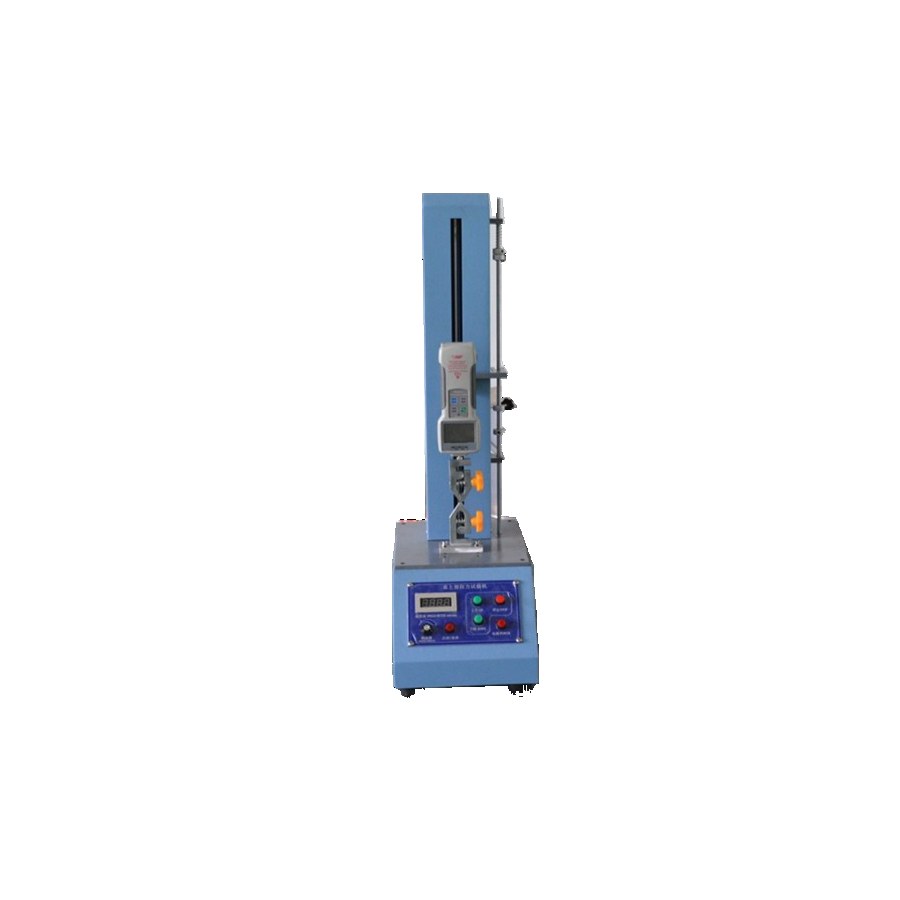
DY-1004 Single-Column Tensile Tester for Peel, Tear and Film Strength
- Date:2026-11-11
- Visits:1040
- Description
- Related products
The DY-1004 is a single-column tensile tester built for low-force work: 180° and 90° peel of pressure-sensitive tapes, labels and protective films, tear and tensile tests on films, paper, nonwovens and elastomers, and small-part compression or bending with optional fixtures. Its compact bench-top frame and low force range make it a practical QC instrument for incoming inspection and production lines.
Fixture choice determines data quality. Thin films need serrated flat jaws or pneumatic grips, rubber needs self-tightening jaws, and paper needs wide flat jaws to avoid local crushing. The same material can give different strength values with different grips, so the fixture type should always be recorded in the test report.
Applications
Typical tasks include peel force of adhesive tape and release liners, seal strength of packaging film, tensile strength and elongation of thin sheeting, and tear resistance of paper and nonwovens. Because the frame is light, it should stand on a vibration-free bench; periodic vibration shows up as regular spikes in the force curve. Re-zero after every fixture change, as grip self-weight offsets the force zero.
Capacity should be 1.5–2 times the maximum specimen force, and the stroke must be sized against maximum elongation rather than specimen length alone — high-elongation materials are the usual reason for running out of travel. Check that the speed range covers every standard to be used, since peel and tensile methods rarely specify the same speed.
Specifications
Item Specification Model DY-1004 Frame Single-column bench-top, motorised Typical tests 180° / 90° peel, tensile, tear, low-force compression and three-point bend Typical specimens Adhesive tape, labels, protective film, plastic film, paper, nonwoven, rubber, elastomer Force capacity Configured to specimen; 1.5–2 × maximum expected force recommended Stroke Sized against maximum elongation of the specimen Test speed Must cover the speed specified by each governing standard Force display Digital gauge or PC data-acquisition software (optional) Data output Single-point force reading; curve, average and report export with PC software Fixtures Interchangeable, customisable to specimen dimensions and material Bench requirement Level, vibration-free, dry, free of corrosive gases Note Range, stroke, speed and fixture configuration are defined in the technical agreement Fixtures and accessories
Item Specification 180° peel fixture Peel force of adhesive tape, labels and protective films 90° peel fixture Adhesive products requiring a vertical peel angle Flat tensile jaws Tensile testing of film, paper and nonwovens Self-tightening jaws Rubber and elastomers prone to slippage Compression / bend accessory Compression and three-point bend of small plastic parts (optional) Grip faces are consumables. Worn serrations reduce clamping force and can create the illusion that "the same batch is getting stronger"; inspecting and replacing jaws is more effective than repeatedly recalibrating the load cell.
Applicable standards
Standard Scope International reference GB/T 1040.3 Plastics — tensile properties of films and sheets ISO 527-3 GB/T 13022-91 Plastics films — determination of tensile properties ISO 527-3 ASTM D882 Tensile properties of thin plastic sheeting ISO 527-3 GB/T 2792 180° peel strength of pressure-sensitive adhesive tapes PSTC-101 GB/T 528-2009 Vulcanised or thermoplastic rubber — tensile stress–strain properties ISO 37 Ordering information
Tell us the specimens, the standards to be covered and the maximum expected force, and we will match capacity, stroke and fixture set. For metal bars and sheets or loads beyond the single-column range, use the DY-20KN double-column tensile tester or the computerised universal tensile tester. If your laboratory reports differ from a customer's, compare specimen width, bonding method and dwell time, peel angle and test speed before questioning the machine accuracy.
Dongguan Dongyang Machinery Co., Ltd. — manufacturer of 200+ reliability testing machines. Contact us for quotation: 13790146684 (WhatsApp/WeChat available).